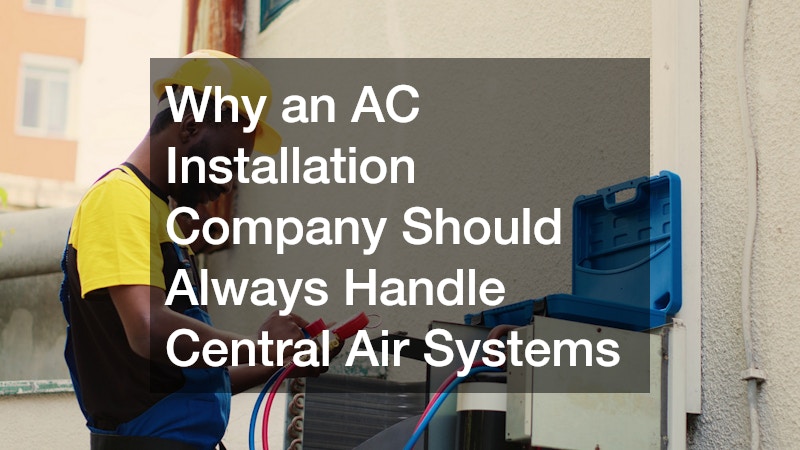
A central air conditioning system is a major investment that affects household comfort, energy use, and indoor air quality. While some home improvement projects can be handled by experienced DIYers, installing a central AC system requires specialized knowledge, technical equipment, and careful attention to multiple components. Hiring an AC installation company helps ensure the system is properly selected, installed, and prepared to operate as intended from the beginning.
Proper System Sizing Is Essential
One of the most important parts of installing central air is determining the appropriate system size for the home. An air conditioner that is too small may struggle to maintain comfortable temperatures during periods of high heat, while an oversized unit may cycle on and off too frequently.
Both situations can reduce efficiency and place unnecessary strain on equipment.
Professionals consider several factors when calculating cooling requirements. Square footage is important, but it is not the only consideration. Ceiling height, insulation levels, window placement, sun exposure, local climate conditions, and the number of occupants can all affect how much cooling a household needs.
An experienced AC installation service can evaluate these details and recommend equipment with the right cooling capacity. This process helps homeowners avoid choosing a system based solely on the size of their previous unit or a general estimate. A properly sized system can provide more consistent temperatures while supporting efficient operation.
Installation professionals can also examine whether the existing ductwork is suitable for the new equipment. Leaks, poor connections, damaged sections, or improperly sized ducts can limit airflow and prevent even a high-quality air conditioner from performing effectively. Addressing these concerns during installation creates a stronger foundation for the entire cooling system.
Professional Installation Protects System Performance
Central air systems involve much more than placing an outdoor unit beside a house and connecting it to indoor equipment. The installation process may include electrical work, refrigerant line connections, condensate drainage, thermostat setup, airflow adjustments, and ductwork integration. Each component must work correctly with the others for the system to operate safely and efficiently.
Refrigerant handling is particularly important because incorrect charging can affect cooling performance and equipment operation. Technicians use specialized tools and procedures to prepare refrigerant lines, check for leaks, and charge the system according to manufacturer specifications. Improper work in this area can create performance problems that may not become obvious until the system is placed under significant demand.
Electrical connections also require careful attention. Air conditioning equipment must receive the correct power supply and include appropriate safety components. Problems with wiring or connections can interfere with system operation and may create serious safety concerns. Professional technicians understand how to complete these steps according to applicable requirements and equipment specifications.
Working with an AC installation company also helps ensure the system is tested after installation rather than simply turned on and left unchecked. Technicians can verify airflow, temperature performance, thermostat operation, drainage, and other essential functions. Identifying and correcting an issue before the job is complete can prevent unnecessary frustration when the household depends on the system most.
Installation Can Affect Long-Term Costs and Comfort
The quality of an installation can influence a central air system throughout its service life. Even equipment with strong efficiency ratings may not deliver its expected performance if it is installed incorrectly. Poor airflow, improper sizing, refrigerant problems, and other installation mistakes can contribute to higher energy bills and uneven temperatures.
Professional installation can also help reduce the likelihood of certain avoidable repairs. When components are connected, calibrated, and tested correctly from the beginning, the system has a better opportunity to operate within its intended parameters. Although all air conditioners eventually require maintenance and repairs, preventing installation-related problems can save homeowners time and unexpected expenses.
Homeowners may also benefit from professional guidance when selecting features for a new system. Modern central air equipment can offer different efficiency levels, thermostat options, humidity control capabilities, and compatibility with other HVAC components. A qualified installer can explain how these features apply to the household’s needs instead of leaving the homeowner to compare technical specifications without context.
In addition, an AC installation company can help homeowners understand the maintenance practices that support continued performance. Changing filters, keeping outdoor equipment clear of debris, scheduling routine service, and paying attention to unusual changes in operation can all help identify potential concerns. Starting with a properly installed system makes it easier to maintain reliable cooling and address issues before they become more extensive.